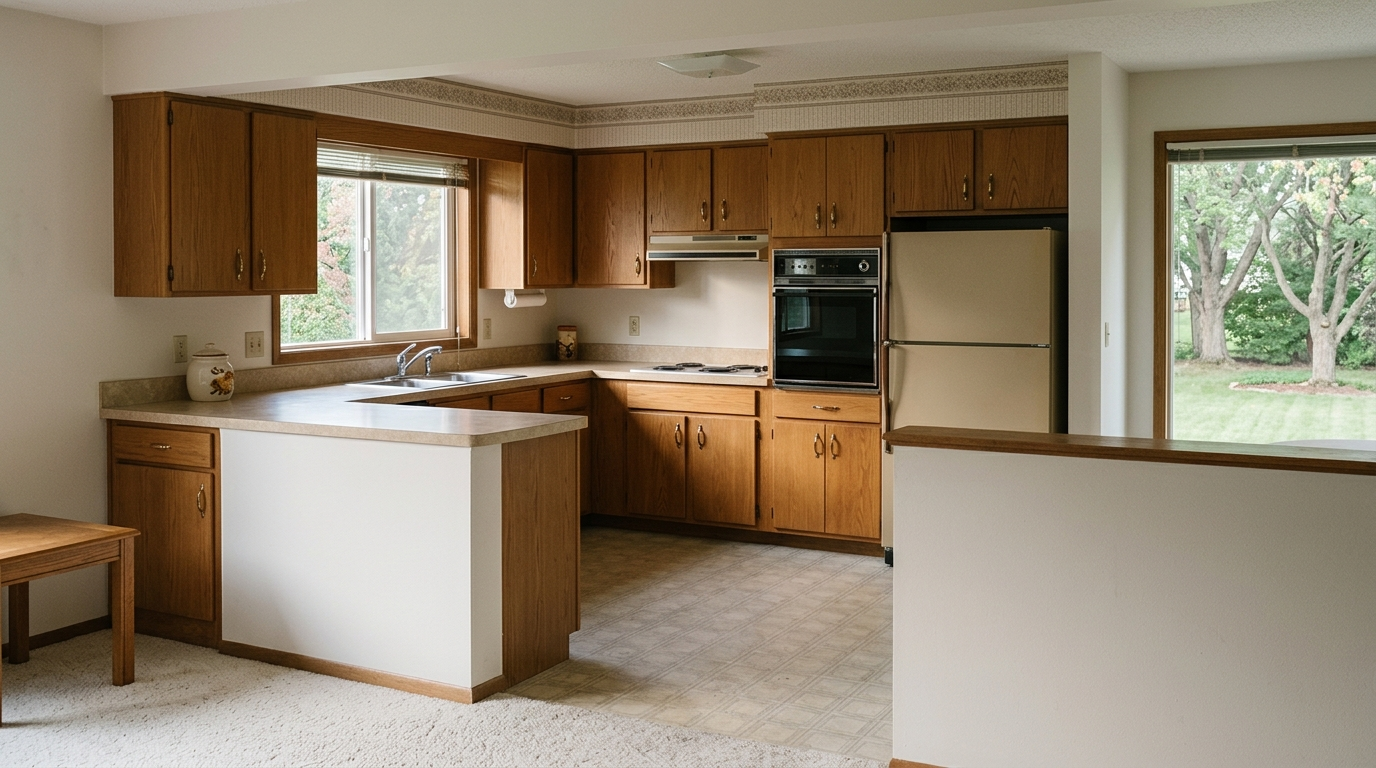


The right way to pay for a major remodel depends on three things: how large and how predictable the project cost is, how the money needs to move during construction, and how long you plan to own the home. Cash avoids debt but drains reserves. A home equity loan delivers one fixed lump sum. A HELOC (home equity line of credit) lets you borrow in stages as invoices arrive. A cash-out refinance replaces your current mortgage with a larger one. Renovation loans tie financing to the finished project and pay the contractor through inspected draws. Each choice either spends, borrows against, or helps rebuild your home equity, and each carries its own cost, timing, and risk. This guide explains how they work so you can have a sharper conversation with a lender or financial advisor before you sign a construction contract.
What Home Equity Means Before You Borrow
Home equity is the difference between what your home is worth and what you still owe on it. If a home would appraise for more than the remaining mortgage balance, that gap is equity you have built through payments and market appreciation. Three of the options below, home equity loans, HELOCs, and cash-out refinancing, let you borrow against that gap, which means the home itself becomes collateral. That is the core tradeoff: secured borrowing usually costs less than unsecured credit, but falling behind on payments can put the house at risk.
Lenders generally will not lend against all of your equity. They typically cap total borrowing at a share of the home's appraised value and leave a cushion. That cushion protects the lender, and it also protects you if values soften while you still carry the debt. Knowing your approximate equity, and how much you would leave untouched, is the first number to settle before comparing anything else.
Paying Cash: Simple, but Not Free
Paying from savings has the lowest total cost on paper. There is no interest, no closing costs, no appraisal, and no lien on the house. It also keeps your equity fully intact, and it often makes scheduling easier because there is no lender approval, waiting period, or inspection before a contractor can be paid.
The hidden cost is liquidity. Money spent on a kitchen is no longer available for a job loss, a medical bill, or the change orders that major remodels commonly produce once walls are opened. Cash works best when the project is well defined, you can fund it fully and still keep a meaningful emergency reserve, and you are prepared to cover overruns. Draining reserves to avoid borrowing can turn a manageable surprise into a forced decision in the middle of construction.
Home Equity Loans: One Lump Sum, Predictable Payments
A home equity loan is a second loan, separate from your existing mortgage, that pays out one lump sum at closing. It is usually repaid over a fixed term with a fixed interest rate, so the monthly payment is predictable from the first month. Your first mortgage stays exactly as it is, which matters if that loan already carries favorable terms.
The structure suits projects with a firm, fully priced scope. The weakness is timing. You begin paying interest on the full amount immediately, even though a contractor may only need a deposit in month one and the balance over several months. If the project grows, you cannot simply draw more; you would need another loan or another source. Closing costs and an appraisal are common, and like every home-secured loan, it reduces the equity available to you until it is repaid.
HELOCs: Flexible Access With Variable Risk
A HELOC works more like a credit card secured by your home. You are approved for a maximum credit line and can borrow, repay, and borrow again during a set draw period. Many lines allow interest-only payments during that window, followed by a repayment period in which you can no longer draw and payments rise to cover principal and interest. Rates are most often variable, so payments can change with the market.
For remodels, the appeal is fit. You draw only what each invoice requires, so you pay interest only on what you have actually used, and unused credit can act as a contingency for change orders. The risks are real, though. A variable rate makes long-term cost uncertain, the payment jump at the end of the draw period can surprise owners who planned around interest-only payments, and lenders may freeze or reduce a line if home values fall. Treat the full credit line as debt you could owe, not as savings.
Cash-Out Refinancing: Replacing the Whole Mortgage
A cash-out refinance replaces your current mortgage with a new, larger one and pays you the difference in cash at closing. You end up with a single loan and a single payment, often at a lower rate than second-lien borrowing, because the lender holds the first position on the home.
The tradeoff is that the entire mortgage balance is reset to today's terms. If your existing rate is lower than what is available now, refinancing may raise the cost of borrowing on every dollar you already owe, not just the remodel portion. Closing costs are typically higher than for a home equity loan or HELOC because you are originating a full mortgage, and a new term can extend how long you are in debt. Cash-out refinancing tends to make the most sense when current terms compare well with your existing loan and the project is large enough to justify a full refinance.
Renovation Loans: Financing Built Around the Project
Renovation loans finance a home based on its expected value after the work is done, rather than only its current value, and pay the contractor from an escrow account as the work progresses. Common examples include the FHA (Federal Housing Administration) 203(k) loan, a government-insured mortgage that combines purchase or refinance with repair costs, and Fannie Mae's HomeStyle Renovation mortgage, a conventional option for a broader range of improvements. These loans can help owners with limited current equity, or buyers purchasing a home that needs work.
The structure brings oversight. Lenders generally require a detailed contractor bid, plans and specifications, and an itemized payment schedule before closing. Draws are released after inspections confirm completed work, sometimes with funds held back until final completion, and programs set deadlines for finishing the project. That discipline protects both borrower and lender, but it adds paperwork, approval time, and limits on which contractors and improvements qualify.
Matching Contractor Milestones to Each Funding Source
Major remodels are rarely paid all at once. Contracts usually call for a deposit, then payments tied to milestones such as demolition, rough-in of plumbing and electrical, inspections, cabinets and finishes, and final completion. A useful planning step, which the studio calls a Funding-to-Milestone Map, is to lay each contract milestone beside the date and form in which your money will actually be available.
Cash and HELOC draws can follow milestones closely. A home equity loan or cash-out refinance delivers everything up front, so the real question is where that money sits safely until each payment is due, and how much interest you are paying on funds not yet spent. Renovation loans reverse the order: the lender's inspected draw schedule governs when the contractor is paid, so the contractor's milestones need to be written to match it, and contractors should be comfortable waiting for inspection-based releases.
Timing also has a legal dimension. Under the federal Truth in Lending Act, many loans secured by a primary residence, including most home equity loans, HELOCs, and refinances with a new lender, carry a three-business-day right to cancel after closing, so funds are not released immediately. Build approval, appraisal, and that waiting period into the construction start date rather than signing a contract that assumes money will be ready on day one.
Choosing by Project Size and How Long You Will Stay
Start with scope and certainty. Smaller or well-defined projects that you can fund without weakening reserves are often best paid in cash. Firmly priced mid-size projects can fit a home equity loan's fixed payment, while longer or more variable projects, where costs arrive in waves and change orders are likely, often fit the staged access of a HELOC. Very large projects may justify a cash-out refinance or a renovation loan, especially when current equity alone cannot support the budget.
Then weigh how long you plan to stay. Upfront closing costs are easier to justify over a long ownership horizon, while a short stay favors options with low fees and limited exposure to resetting your mortgage. Owners planning to sell within a few years should be cautious about borrowing heavily against equity for improvements whose value they may not recapture. Long-term owners can think more about lifetime ownership cost and how the finished home will serve them.
This overview is general information, not financial or lending advice. Terms, fees, eligibility, and tax treatment vary by lender, program, and household. Before choosing, compare written loan estimates and confirm the best fit with a lender or a qualified financial advisor.
Disclaimer: The content provided in this article is for informational purposes only and is not intended as financial, tax, or investment advice. JL Coates is not a financial advisor, tax consultant, or investment specialist. We recommend consulting with a professional financial advisor, tax specialist, or investment advisor to discuss your specific circumstances before making any financial, tax, or investment decisions based on this information. JL Coates assumes no responsibility for any actions taken based on the information provided in this article.