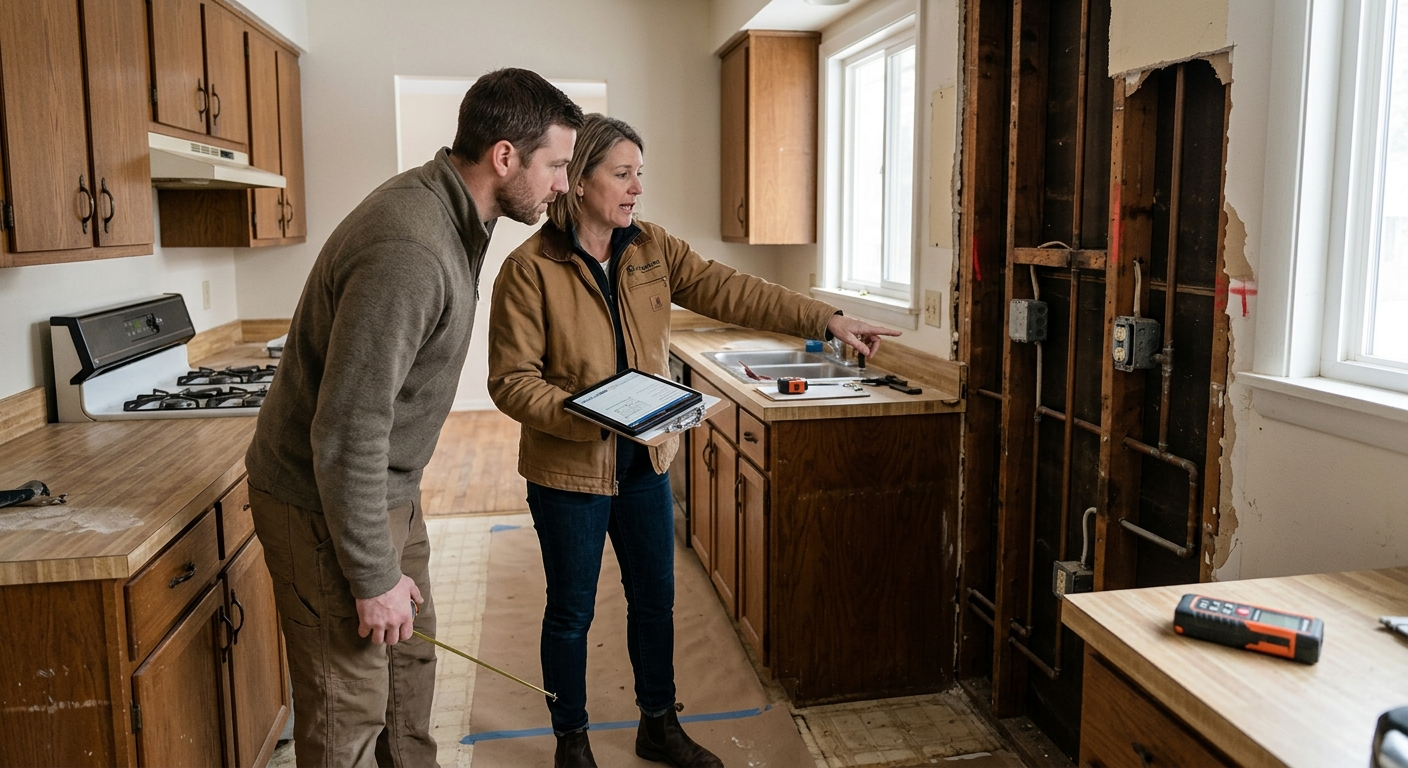
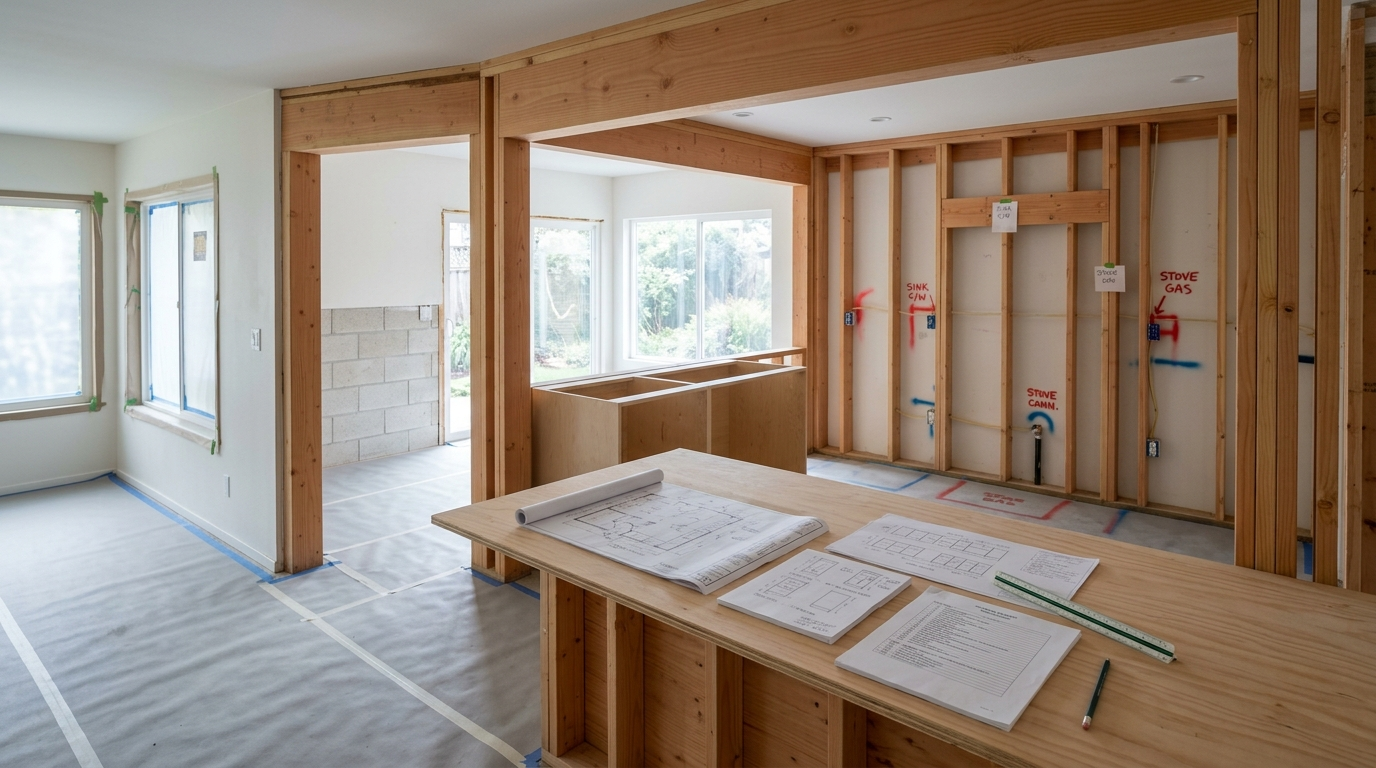
Existing conditions should be reviewed before setting a remodel budget because the current structure, systems, access, and site constraints determine what the project will actually require. Without that review, a budget can look clean on paper while missing the work needed to make the remodel buildable, code-aware, and properly sequenced. The goal is not to make the earliest number more complicated. It is to make it more honest before decisions are made around a number that may not reflect the house in front of the team.
A Remodel Budget Starts With What Is Already There
New construction starts with a clearer baseline. Remodeling starts with inherited conditions. Existing framing, plumbing runs, electrical capacity, slab conditions, ceiling heights, window openings, drainage, past repairs, and access paths all shape what can happen next. Even when the finished design is well defined, the starting point still controls how much preparation, correction, and coordination the project will need.
That is why a budget built only from desired finishes or square footage can be misleading. Two remodels with similar layouts can carry very different construction requirements if one has outdated wiring, uneven floors, water damage, limited attic access, or structural changes hidden inside the walls. Reviewing existing conditions gives the budget a real construction basis instead of treating the home as a blank canvas.
Hidden Conditions Often Become Budget Conditions
The most expensive surprises are often not decorative choices. They are the conditions that have to be addressed before visible progress can continue. A wall may need structural support before it can be opened. A bathroom layout may depend on whether plumbing can be moved without major slab work. A kitchen plan may require electrical upgrades before new appliances, lighting, or dedicated circuits can be safely supported.
These are not minor details once the work is underway. They can affect labor, inspections, materials, schedule, and trade availability. When they are discovered late, the project team has fewer options and the homeowner has less time to make calm decisions. Reviewing them early does not remove every unknown, but it does reduce the number of avoidable unknowns that get priced only after demolition has already started.
Early Review Helps Separate Allowances From Real Scope
A budget usually contains a mix of known scope, allowances, and assumptions. Existing-condition review helps clarify which items belong in each category. If the team can confirm that the subfloor is sound, that portion of the estimate can be firmer. If the condition of a concealed line cannot be verified yet, the budget can carry a clear allowance or contingency instead of pretending the risk does not exist.
This distinction matters because allowances are not failures. They are honest placeholders for items that cannot be fully known yet. The problem comes when unknowns are treated as fixed costs. A good review helps everyone understand where the budget is solid, where it is conditional, and where a decision or investigation would improve accuracy before the project moves forward.
Sequencing Depends on the Starting Conditions
Existing conditions also affect the order of work. A remodel is not just a list of tasks; it is a sequence of dependencies. If structural repairs need to happen before rough plumbing, that changes the schedule. If electrical upgrades require wall access before cabinetry is installed, that needs to be coordinated early. If flooring transitions depend on leveling work, finish selections and installation timing may need to adjust.
When these conditions are understood before budgeting, the estimate can reflect the real path of construction. It can include the preparation steps that protect later work. When they are missed, the project may still move forward, but the sequence becomes reactive. That is where delays and rework tend to build quickly.
Trade Coordination Gets More Accurate
Remodeling depends on trades working around existing spaces, not ideal conditions. The plumber, electrician, framer, HVAC technician, tile installer, cabinet installer, and finish carpenter may all be affected by the same underlying constraint. A low ceiling, tight chase, uneven wall, or limited access point can change how several trades approach their work.
Reviewing existing conditions gives the team a chance to coordinate those realities before pricing is finalized. It helps identify where one trade needs to complete work before another can proceed and where a design choice may create additional labor in the field. Better coordination at this stage can prevent a budget from undercounting the effort required to make separate parts of the remodel fit together properly.
The Review Protects the Homeowner From False Precision
A precise-looking budget is not always an accurate budget. A detailed number can still be built on weak assumptions if the existing home has not been reviewed carefully. Homeowners can then make major decisions around a total that feels certain but does not yet reflect the condition of the structure, systems, or site.
A practical budget should be clear about what has been verified and what remains unknown. That transparency is more useful than an early number that avoids uncomfortable questions. It allows the homeowner to compare options with a better understanding of risk, contingency, and timing. It also creates a healthier project conversation because adjustments are tied to real conditions, not vague overruns.
What Should Be Reviewed Before Budgeting
The right review depends on the project, but several areas deserve attention before a remodel budget is treated as reliable. The team should look at structural implications, mechanical and electrical capacity, plumbing locations, signs of moisture or prior damage, floor and wall conditions, access for materials and crews, demolition requirements, permit considerations, and any constraints that could affect inspections or sequencing.
This does not mean every wall must be opened before a budget can exist. It means the budget should reflect the level of certainty available. Sometimes a visual review, site measurements, photos, and trade input are enough to create a stronger planning number. Other times, selective investigation or specialist review is worth doing before the homeowner commits to a scope that carries hidden risk.
A Better Budget Makes Better Decisions Possible
The purpose of reviewing existing conditions is to make the remodel easier to plan, price, and execute with fewer preventable surprises. It gives the budget a stronger foundation, helps the team sequence the work realistically, and gives the homeowner a clearer view of where money may need to be spent before the finished details come into focus.
A remodel will always carry some unknowns because existing homes do not reveal everything at the start. But there is a difference between normal uncertainty and avoidable guesswork. The more the team understands the current conditions before setting the budget, the better the project can move from planning into construction with decisions that are practical, coordinated, and financially grounded.
Disclaimer: The content provided in this article is for informational purposes only and is not intended as financial, tax, or investment advice. JL Coates is not a financial advisor, tax consultant, or investment specialist. We recommend consulting with a professional financial advisor, tax specialist, or investment advisor to discuss your specific circumstances before making any financial, tax, or investment decisions based on this information. JL Coates assumes no responsibility for any actions taken based on the information provided in this article.