
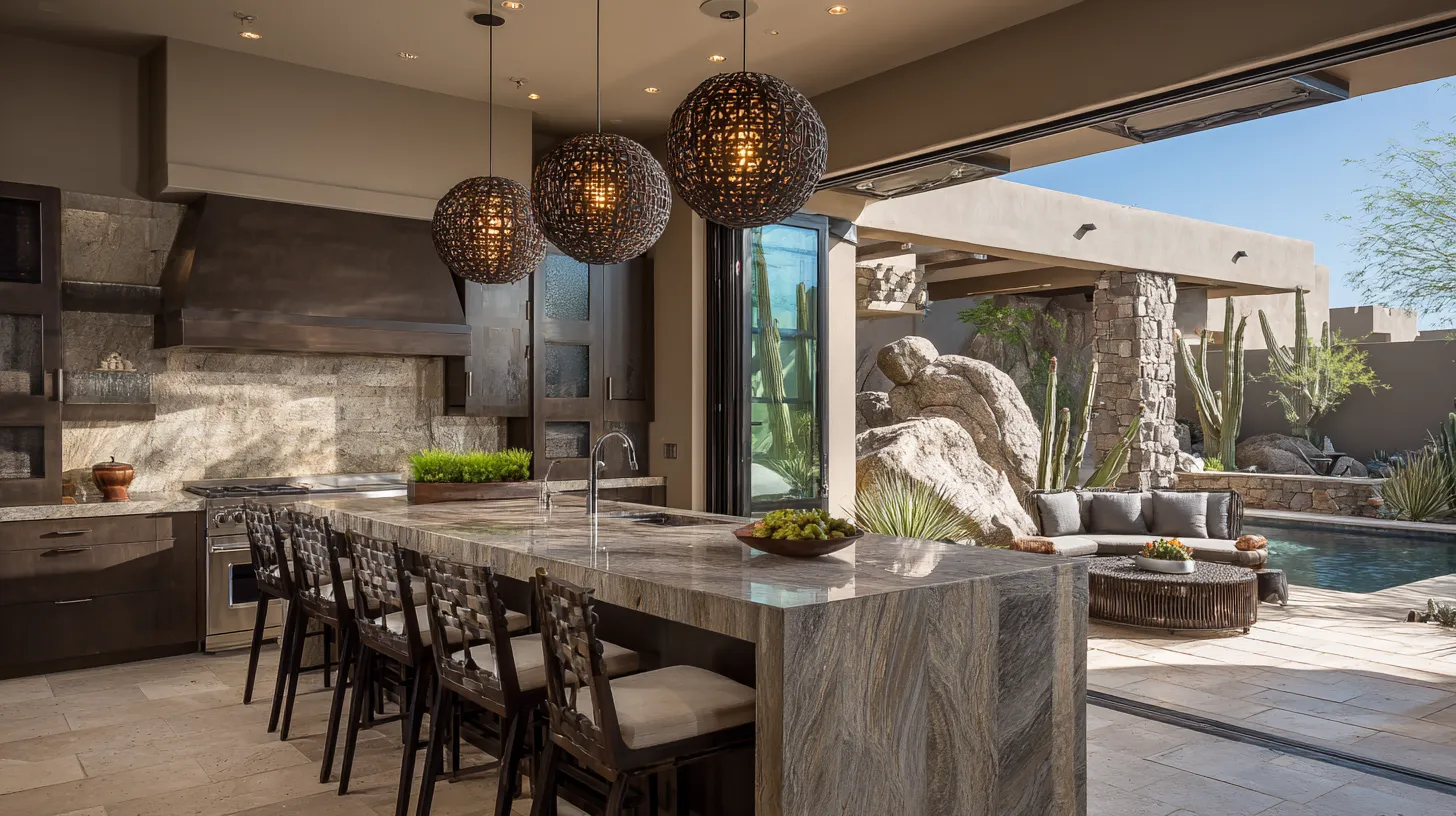
FF&E stands for furniture, fixtures, and equipment: the movable and decorative items that finish a space, as opposed to the walls, wiring, plumbing, and built-in work handled in construction. On a proposal or schedule, it marks the part of the project that is selected, ordered, and delivered rather than built on site.
What Usually Falls Inside FF&E
Furniture is the clearest category: sofas, beds, dining tables, chairs, and freestanding storage. Fixtures in this sense usually means decorative lighting such as lamps, chandeliers, and pendants, along with mirrors, rugs, and window treatments like drapery and shades. Equipment can include freestanding appliances or electronics, depending on how a project is scoped. Accessories, art, and bedding are often grouped in as well. A simple test helps: if an item can be removed without tearing anything out, it most likely belongs in FF&E.
What Belongs to the Construction Scope Instead
Items permanently built into the home typically sit in the construction scope. That includes framing, drywall, electrical and plumbing systems, cabinetry and other built-in millwork, countertops, tile, flooring, and plumbing fixtures such as sinks and toilets. Hard finishes like tile and paint are usually tracked on a finish schedule, which tells the builder what to install. The gray zone is real: a light fixture may be chosen by the designer but wired by an electrician, so each project should state clearly who buys and who installs every crossover item.
Why FF&E Gets Its Own Schedule and Budget
A separate FF&E schedule lists each item with its dimensions, finish, quantity, cost, vendor, and delivery status. Keeping it apart from the construction budget makes spending easier to see and adjust. A client can trade a custom sofa for a ready-made one without reopening the builder's contract, and the budget can include freight, storage, and installation, which are easy to overlook when only product prices are counted.
How FF&E Connects to Lead Times and Ordering
Furniture lead times often drive the real finish date. In-stock pieces may arrive in weeks, while made-to-order or custom upholstery can take several months. Because of that, FF&E selections are usually approved during design, often while construction is still underway, so long-lead pieces arrive close to completion. When decisions slip, a finished room can sit empty, and move-in can feel delayed even after the builder is done.
The Takeaway on FF&E
FF&E is the layer that makes a finished space livable: the pieces chosen, ordered, and placed rather than built. Knowing what sits in FF&E, what sits in construction, and who owns each crossover item makes budgets clearer. Approving long-lead pieces early is the most reliable way to keep the finished rooms on schedule.
Disclaimer: The content provided in this article is for informational purposes only and is not intended as financial, tax, or investment advice. JL Coates is not a financial advisor, tax consultant, or investment specialist. We recommend consulting with a professional financial advisor, tax specialist, or investment advisor to discuss your specific circumstances before making any financial, tax, or investment decisions based on this information. JL Coates assumes no responsibility for any actions taken based on the information provided in this article.
