
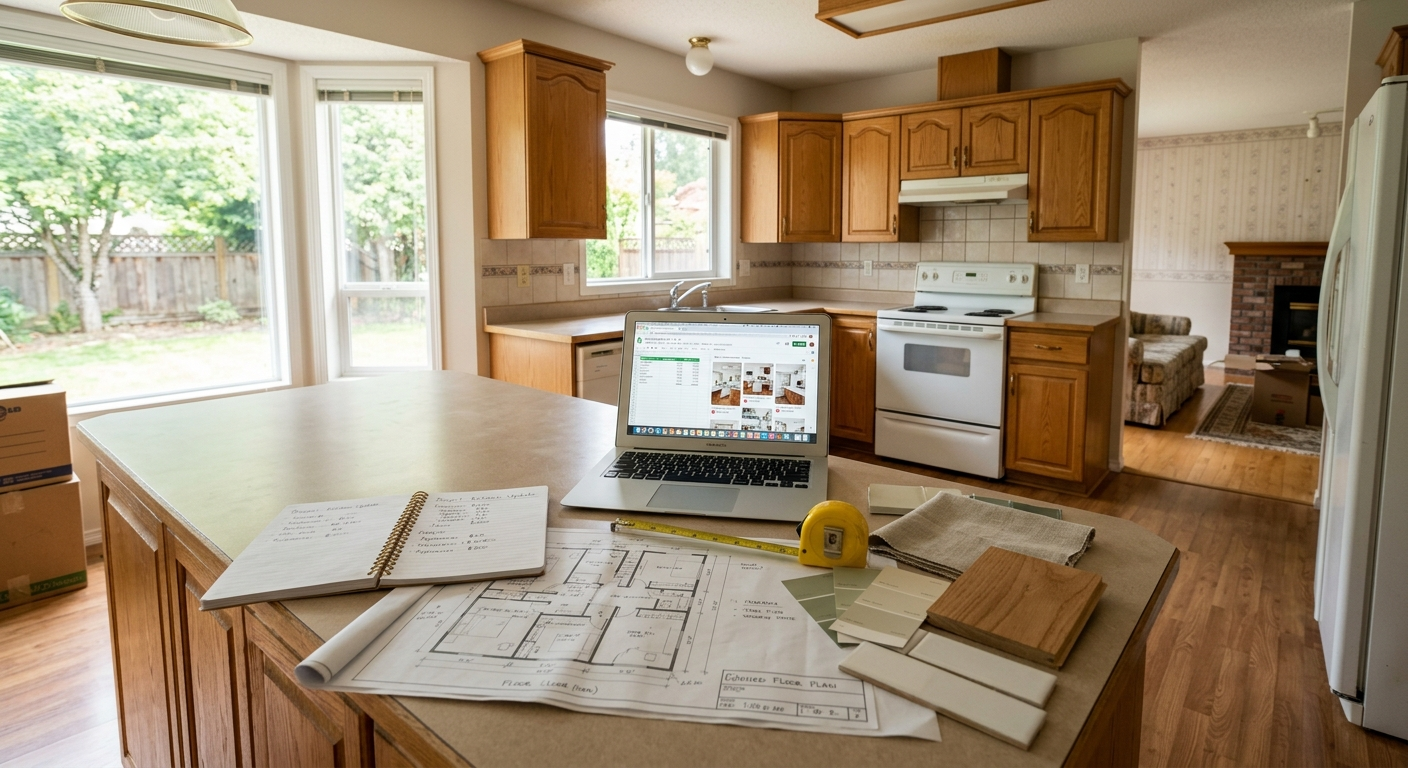

The smartest way to budget for design work after buying a home that needs updates is to separate the purchase decision from the improvement plan while still treating both as one financial picture. A lower purchase price can create opportunity, but only if the buyer understands what the home needs, what can wait, and how much flexibility should remain after closing.
Start With the Home's Real Priorities
A home that needs updates usually has more possibilities than a buyer can responsibly tackle at once. The first budgeting step is not choosing finishes. It is identifying which improvements affect daily function, resale strength, safety, or long-term value.
Cosmetic changes may feel urgent because they are visible, but layout issues, worn systems, poor lighting, storage gaps, or dated high-use spaces can have a larger effect on how the home lives. A disciplined budget separates need from preference before money is assigned. That does not mean style is unimportant. It means design choices should support the way the home will be used, not simply respond to the first thing that feels dated.
Protect Cash After Closing
The biggest mistake many buyers make is assuming the purchase price tells the whole story. Closing costs, moving expenses, furnishings, temporary repairs, and early maintenance can all arrive before the design plan even begins. A smart buyer preserves a cash cushion before committing to a full design scope.
That cushion matters because older or under-updated homes often reveal additional needs once the buyer is living in the space. Even a well-inspected home can present practical surprises: electrical limitations, uneven floors, cabinet constraints, plumbing access, or appliance fit issues. Budgeting with room for discovery keeps a project from becoming stressful the moment something changes.
Build the Design Budget in Phases
A phased budget helps buyers improve the home without overextending too early. The first phase should focus on the spaces that most affect comfort and function, often the kitchen, primary living areas, bathrooms, entry points, or storage. Later phases can handle refinements, secondary rooms, decorative upgrades, or outdoor improvements.
This approach also gives the homeowner time to understand the property. Some choices are easier to make after living in the home for a few months. Light patterns, traffic flow, entertaining habits, work routines, and storage needs are easier to judge in real life than during a showing. Phasing protects the budget and often leads to better design decisions.
Know the Difference Between Design Fees and Project Costs
Design work is not only the cost of furniture, materials, or contractor labor. Professional planning, drawings, sourcing, project coordination, purchasing support, and decision guidance may all carry separate costs. Buyers should ask early how the design process is structured so they can budget for expertise as well as execution.
This is important because good design guidance can prevent expensive mistakes. Choosing the wrong scale, ordering too early, underestimating lead times, or improving the wrong area first can cost more than the planning itself. A realistic budget includes the professional support needed to make confident decisions, especially when the home has multiple competing priorities.
Match Improvements to Long-Term Goals
Not every update needs to be justified by resale value, but every meaningful investment should make sense within the owner's longer-term plan. A buyer who expects to stay for ten years may prioritize comfort, personal fit, and durable materials differently than a buyer who may sell in three years. An investor will evaluate the budget through an even sharper lens, focusing on rentability, buyer appeal, and controlled renovation scope.
The right design budget depends on the purpose of the home. Spending more is not automatically better, and spending less is not automatically disciplined. The better question is whether each improvement supports the owner's timeline, lifestyle, market position, and ability to maintain financial flexibility.
Avoid Treating the Purchase Discount as Free Money
A home that sells below the price of more updated properties may create room for improvement, but that gap should be studied carefully. Some buyers see the difference between the purchase price and renovated comparables as a design allowance. That can be risky if the home needs more work than expected or if neighborhood values do not support the full investment.
Before assuming the discount creates automatic upside, buyers should compare the likely improvement cost with the value of finished homes nearby. The goal is not to predict the market perfectly. It is to avoid spending in a way that leaves the homeowner with limited equity, limited flexibility, or a home improved beyond what the local market will comfortably support.
Plan the Budget Before the Pressure Builds
The best time to think about design costs is before the buyer feels rushed to solve every problem at once. A clear budget gives the homeowner permission to move steadily, choose priorities with confidence, and avoid emotional spending after closing.
A home that needs updates can be a strong opportunity when the buyer treats design work as part of the larger real estate decision. The goal is not to make every improvement immediately. The goal is to protect financial breathing room, invest in the right order, and shape the home in a way that supports both daily life and long-term value.
Disclaimer: The content provided in this article is for informational purposes only and is not intended as financial, tax, or investment advice. JL Coates is not a financial advisor, tax consultant, or investment specialist. We recommend consulting with a professional financial advisor, tax specialist, or investment advisor to discuss your specific circumstances before making any financial, tax, or investment decisions based on this information. JL Coates assumes no responsibility for any actions taken based on the information provided in this article.


