
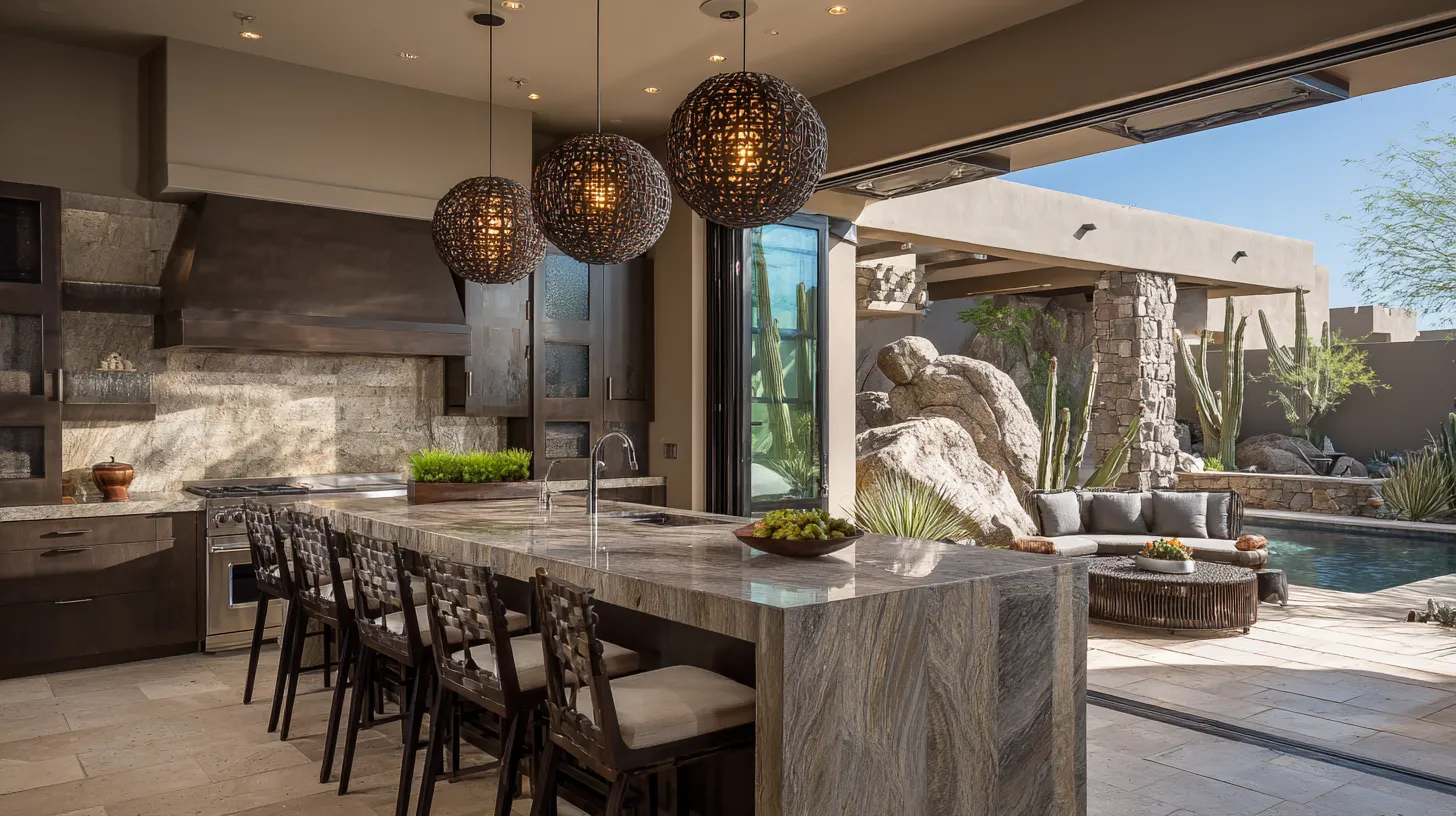
A room rarely looks outdated simply because it contains older pieces. It usually feels dated when several choices point strongly to one past moment, or when finishes, lighting, and proportions no longer support the way the space is used. The strongest clues are often cumulative: one feature may feel nostalgic, but a collection of mismatched or neglected details can make the whole room feel stuck.
Too Many Era-Specific Features
Strongly recognizable finishes can date a room when they dominate every surface. Trend-driven tile, heavily themed hardware, ornate window treatments, or a single wood tone repeated everywhere may lock the space to a particular period. An older feature can still work beautifully when it is balanced by simpler elements, current lighting, and enough visual breathing room.
Everything Matches Too Closely
Furniture suites, identical finishes, and coordinated accessories can make a room feel arranged all at once. Rooms with lasting appeal usually contain some variation in age, shape, texture, and material. This does not require an eclectic look. Even small contrasts, such as pairing a clean-lined sofa with a vintage table or mixing metal finishes thoughtfully, create depth and keep the room from reading like a catalog from one year.
Scale and Placement Feel Off
A rug that floats in the middle of the floor, art hung too high, tiny lamps beside large furniture, or seating pushed against every wall can make the entire room feel awkward. These choices are not tied to one decade, but they often signal that a room has not been reconsidered in a long time. Correcting scale and placement can create more improvement than replacing major furniture.
Lighting and Condition Reveal Age
Even a well-designed room can look tired under a single harsh ceiling fixture. Yellowed lampshades, dim corners, worn upholstery, chipped finishes, and faded textiles make age more visible. Layered lighting, including ambient, task, and accent light, gives surfaces greater depth. Cleaning, repairing, or refinishing what is already there can also separate intentional character from simple wear.
Update the Overall Balance
The most effective refresh begins by identifying the few elements with the greatest visual weight. Improve lighting, correct the rug and furniture scale, edit overly coordinated accessories, and repair visible wear before chasing new trends. Keep older pieces that add character and remove only what overwhelms the room. A space feels current when its parts are cared for, balanced, and chosen with intention, not when every item is new.
Disclaimer: The content provided in this article is for informational purposes only and is not intended as financial, tax, or investment advice. JL Coates is not a financial advisor, tax consultant, or investment specialist. We recommend consulting with a professional financial advisor, tax specialist, or investment advisor to discuss your specific circumstances before making any financial, tax, or investment decisions based on this information. JL Coates assumes no responsibility for any actions taken based on the information provided in this article.
