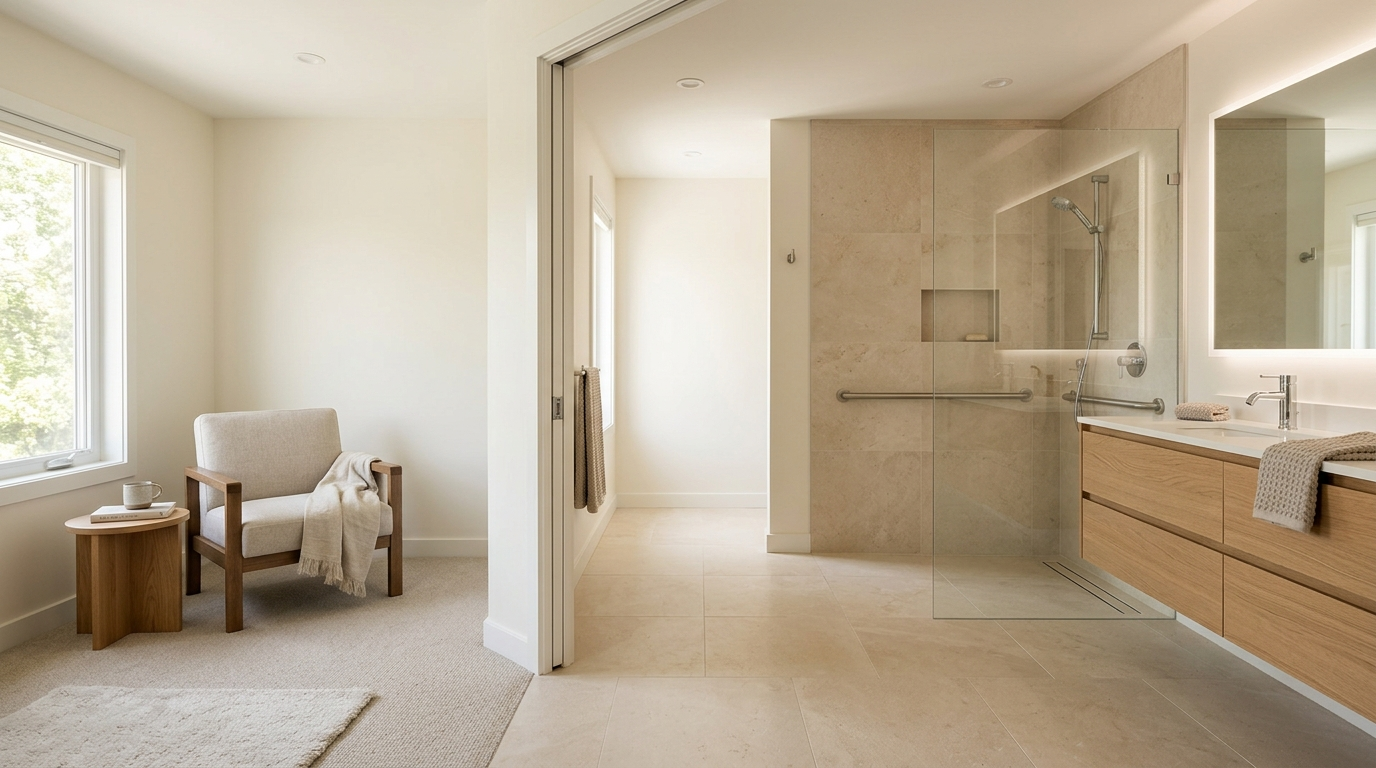

The strongest remodel decisions usually happen before anything is removed: decide what still supports the future design, what must be replaced, and what can be reworked so the budget goes toward changes that improve function, proportion, and long-term cohesion. A good pre-remodel review is less about saving everything and more about understanding what has design value, structural value, or no longer belongs in the room.
Start With The Future Room
Before deciding what stays, define what the room needs to become. A cabinet, doorway, fireplace, window treatment, or flooring material can only be judged properly against the future plan. Something may look dated on its own but work beautifully once the room has better lighting, cleaner lines, or a more balanced layout.
This is where many remodels lose discipline. Decisions are made one item at a time, and the result becomes a collection of unrelated compromises. Instead, look first at the intended layout, circulation, focal points, storage needs, and overall mood. Then ask whether each existing element helps that direction or works against it.
Keep What Supports Scale And Character
The best things to keep are usually the elements that give a home proportion, quality, or architectural character. Original wood floors, well-placed windows, solid interior doors, stonework, ceiling beams, or built-ins may not need replacing if they already give the room a sense of scale and permanence.
Keeping something should not mean ignoring its flaws. It may need refinishing, better hardware, updated trim, or a quieter surrounding palette. The point is to recognize when an existing feature has underlying value. Preserving those pieces can keep a remodel from feeling stripped of personality, while also freeing budget for changes that matter more.
Replace What Limits Function Or Longevity
Replacement makes sense when an element is actively holding back the room. Poorly planned cabinetry, failing surfaces, awkward lighting, low-quality flooring, damaged plumbing fixtures, or windows that perform badly can affect daily use as much as appearance. If something will continue to create frustration after the remodel, keeping it rarely saves money in the long run.
The key is to separate cosmetic dislike from real limitation. A finish color can often be changed. Bad proportions, poor storage, unsafe wiring, moisture damage, and unreliable materials are different matters. Those issues tend to shape how the room functions, wears, and feels over time, so they deserve a stronger claim on the remodel budget.
Rework What Has Good Bones
Some elements sit between keeping and replacing. They may be structurally sound, well located, or properly scaled, but visually out of step with the future design. These are often good candidates for reworking. A fireplace can be simplified, cabinetry can be repainted or refaced, a stair rail can be updated, and a built-in can be adjusted so it feels intentional again.
Reworking is most successful when the original element has enough quality to justify the effort. If the base material is weak or the proportions are wrong, a partial fix can become expensive camouflage. But when the bones are good, reworking allows the design to feel layered rather than newly installed from one catalog.
Separate Sentiment From Design Value
Homes hold memory, and that should not be dismissed. Still, sentimental value and design value are not always the same thing. A piece may matter emotionally but interrupt the room's layout, scale, or cohesion. Another element may not feel exciting, yet quietly gives the space balance.
A useful test is to ask whether the item can support the future room without forcing every other decision to work around it. If it can, keep it or rework it with care. If it cannot, consider documenting it, relocating it, or finding another way to honor the memory. Good design is not cold, but it does need clarity.
Let Budget Follow Impact
A remodel budget should stretch where change will improve how the home works every day. That may mean investing in layout corrections, lighting, storage, durable surfaces, or architectural details that make the room feel resolved. It may also mean pulling back on pieces that are already performing well, even if they are not brand new.
This is where professional judgment helps. The most visible change is not always the most important one. A quieter investment, such as better lighting placement or properly scaled cabinetry, can do more for the finished room than replacing a feature that only needed refinishing. The budget should follow impact, not impatience.
Test The Decisions As A Whole
After sorting items into keep, replace, and rework, step back and read the room as a complete composition. The categories should support one another. If too much is being kept, the remodel may not solve the original problem. If too much is being replaced, the home may lose character and the budget may thin out across too many areas.
Look for balance. The kept elements should feel intentional, the replaced elements should solve real problems, and the reworked elements should bridge old and new. When those decisions work together, the finished space feels cohesive rather than patched together.
Make The Call Before Construction Starts
The best time to decide what stays, goes, or changes is before demolition begins. Late decisions tend to create delays, rushed substitutions, and avoidable costs. They can also weaken the design because each new choice is made under pressure rather than as part of the whole plan.
A thoughtful pre-remodel review gives the project a clearer foundation. It protects the features worth preserving, removes the pieces that would keep the home from working well, and identifies where reworking can bring character forward. That clarity is what allows a remodel to feel considered, cohesive, and built for the way the home should live next.
Disclaimer: The content provided in this article is for informational purposes only and is not intended as financial, tax, or investment advice. JL Coates is not a financial advisor, tax consultant, or investment specialist. We recommend consulting with a professional financial advisor, tax specialist, or investment advisor to discuss your specific circumstances before making any financial, tax, or investment decisions based on this information. JL Coates assumes no responsibility for any actions taken based on the information provided in this article.