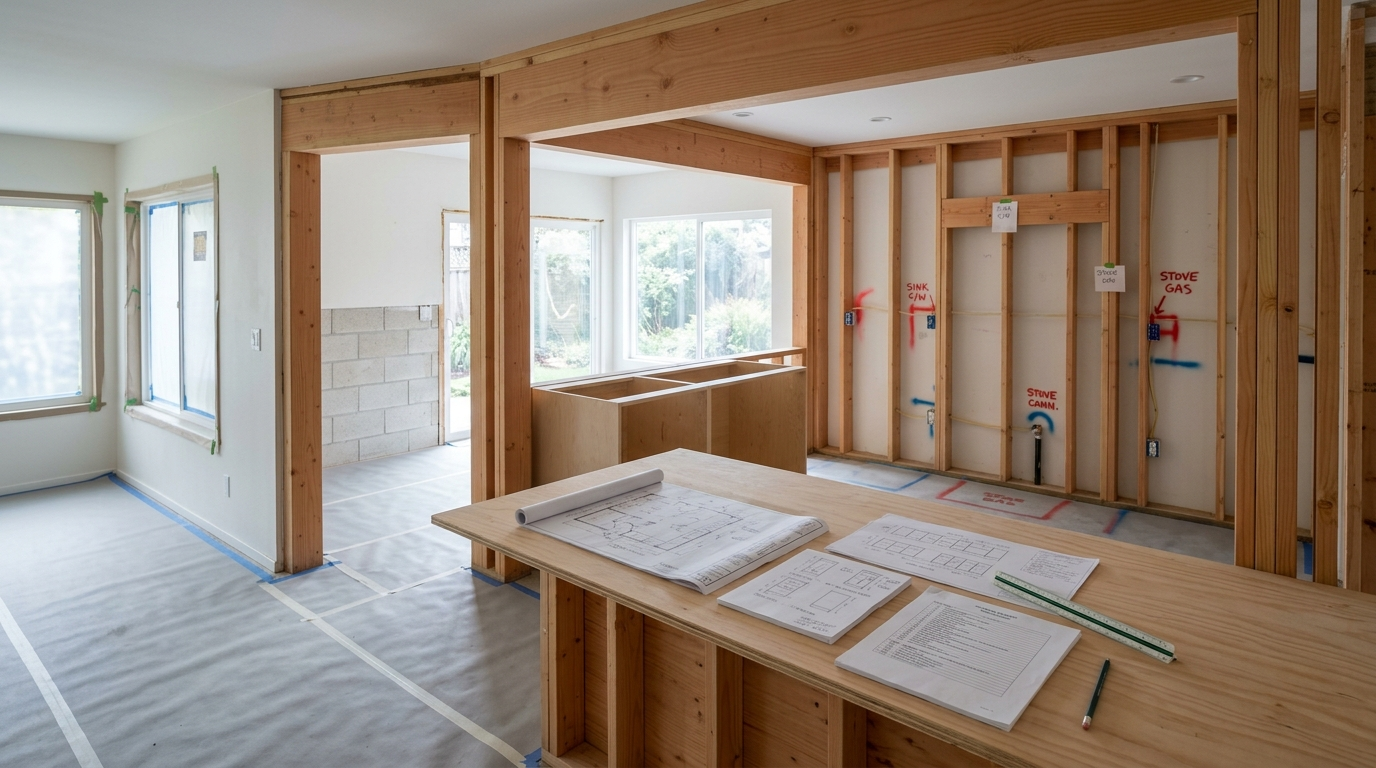
Design is not just about aesthetics or producing drawings. It is the decision-making and coordination phase where scope is defined, assemblies are proven, systems are routed, code paths are confirmed, and procurement needs are identified early enough to protect the schedule. When design is skipped or heavily compressed, those decisions do not disappear. They reappear during construction as unresolved questions, rework, late selections, permit revisions, and procurement surprises, all of which introduce stop-and-go production and push critical milestones.
Why the design process functions as schedule insurance
A stable construction schedule depends on predictable work packages: clear scope boundaries, buildable details, coordinated trades, and timely material releases. The design process is where these elements are stabilized before labor, equipment, and subcontractors are committed. When design is incomplete, the project shifts from planned production to continuous problem-solving. That transition reduces crew productivity, increases interruptions, and forces resequencing, which commonly causes duration growth beyond the time that was “saved” by starting early.
Common ways design gets skipped and what is actually missing
Design is often “skipped” in practice by starting construction on partial drawings, treating design development as optional, relying on allowances instead of decisions, or moving forward without coordinated structural and building systems layouts. The missing components are usually not obvious at first because early construction activities can proceed with limited information. The gaps surface later at exactly the moment when downstream work needs final dimensions, penetrations, elevations, equipment clearances, attachment requirements, and finish transitions. The schedule impact becomes acute when multiple trades need the same area and none can complete work without decisions that were supposed to be made earlier.
How incomplete design drives RFIs, change orders, and lost time
Incomplete design increases the volume and urgency of requests for information because installers must clarify intent before committing work. Each clarification has a cycle time: discovery, documentation, review, response, and distribution, followed by field implementation. If the answer changes prior assumptions, previously installed work may need modification or removal. This dynamic creates schedule fragmentation, where crews mobilize, stop, and remobilize, which is inherently less efficient than continuous work. Change orders add another layer of delay when pricing, review, and authorization are required before proceeding, particularly when the affected work sits on the critical path.
Trade coordination failures and the hidden cost of rework
Coordination is where schedule risk often becomes unavoidable. Mechanical, electrical, plumbing, fire protection, and structural systems compete for limited space, and their routes must align with architectural intent, code clearances, and maintenance access. Without coordinated layouts, conflicts are discovered during rough-in, when changes are expensive and time-consuming. Even small shifts in duct routing or piping elevation can force redesign of hangers, seismic bracing, penetrations, shaft sizes, framing, and ceiling heights. Rework also creates secondary delays: inspections may need to be repeated, close-in milestones slip, and finish trades cannot start or must stop midstream.
Permitting, inspections, and approval timelines become unpredictable
Permitting and inspection processes are built around documented intent. When drawings are incomplete or inconsistent, reviewers issue corrections that can require redesign and resubmittal, extending approval durations. During construction, incomplete design can also trigger inspection failures because installed conditions do not match the approved documents or lack sufficient detail to demonstrate compliance. Correcting these issues is not just a field fix; it often requires formal revisions, updated calculations, and re-coordination, which consumes time while progress in affected areas slows or stops.
Procurement and long lead items become schedule traps
Design decisions directly control procurement lead times. Equipment capacities, electrical characteristics, control sequences, finish selections, and specialty assemblies must be confirmed early enough to release submittals and orders. When design is delayed, procurement is delayed, and the project may be forced into substitutions, premium freight, or temporary workarounds that still do not eliminate the calendar impact. Long lead items can quietly take over the critical path when they are identified late, especially if installation depends on rough-in dimensions, embedded items, or coordination that cannot be finalized without the selected product.
Field sequencing breaks down when decisions are late
Construction sequencing assumes prerequisites are met before a crew arrives: layout is confirmed, embeds and blocking locations are known, penetrations are coordinated, and adjacent scopes will not need to be reopened. Skipping design increases the probability that work is installed out of sequence, either because the correct sequence is unknown or because teams are trying to “stay busy” while waiting for decisions. Out-of-sequence work typically produces double-handling, access conflicts, and quality risks. It also complicates commissioning and turnover because systems cannot be tested reliably until installation is complete and aligned with approved intent.
How to reduce schedule risk without overextending the timeline
Schedule stability improves when design is treated as a set of decision gates rather than a single deliverable. The practical goal is not perfection, but sufficient definition for each work package before it becomes time-sensitive. Early alignment on scope, performance requirements, and finish levels reduces late changes. Prioritizing coordinated building systems, resolving critical dimensions, and confirming code paths before rough-in protects close-in milestones. For projects that must start early, limited early-release packages can work when boundaries are clear, interfaces are defined, and procurement decisions are made deliberately, with documented assumptions and contingency plans for known unknowns. The safest schedules are those that acknowledge design as the first phase of construction execution, because unresolved design questions do not disappear; they convert into field delays that are harder to control and almost always more disruptive.
Disclaimer: The content provided in this article is for informational purposes only and is not intended as financial, tax, or investment advice. JL Coates is not a financial advisor, tax consultant, or investment specialist. We recommend consulting with a professional financial advisor, tax specialist, or investment advisor to discuss your specific circumstances before making any financial, tax, or investment decisions based on this information. JL Coates assumes no responsibility for any actions taken based on the information provided in this article.